Address
doha Imm E4 Res guilize 3éme TR, Marrakech-Medina - Maroc


Marrakech to Fes Tour: Complete Itinerary & Travel Guide (2026)
Marrakech to Fes Tour: Complete Itinerary & Travel Guide (2026)
A Marrakech to Fes Tour is one of Morocco’s most rewarding overland journeys. It connects two iconic cities, yet the real magic happens between them. You cross the High Atlas Mountains, pass kasbah valleys, and, if you choose the desert route, spend a night near the dunes. Because the landscapes change fast, the trip feels like several destinations in one.
This guide explains how to plan the best Marrakech to Fes experience with realistic timing and comfort. You will see the main route options, the most common 2–3 day itineraries, and the key decisions that affect quality. Along the way, you’ll also learn how this route fits Where to Go in Morocco, how it connects to Sahara desert tours from Marrakech, and how to choose between private travel, Morocco Small Group Tours, and other morocco group tours.
Why take a Marrakech to Fes tour instead of flying or taking the train?
Flying saves time, but it skips Morocco’s most scenic corridor. A tour lets you experience the High Atlas passes, historic ksars, palm valleys, and desert-edge towns that you would never see from the air. In addition, the journey breaks your trip into meaningful chapters. Instead of “teleporting” from Marrakech to Fes, you understand how Morocco’s geography and culture transition from south to north.
A train between Marrakech and Fes requires a change in Casablanca, and it still misses the kasbah country. Therefore, many travelers prefer a road route even if it takes longer. This is especially true for people who want Authentic Morocco Travel Experiences and memorable photo stops. When planned well, the road journey becomes a highlight, not just transportation.
The two main route styles (direct vs desert)
There are two popular ways to travel from Marrakech to Fes by road. The first is a “direct” route that focuses on mountains, valleys, and Midelt-style landscapes. It is usually done in 2 days, and it avoids the deep Sahara dunes. This option suits travelers who want scenery but prefer shorter total driving hours than a full desert loop.
The second style is the famous desert route via Merzouga (Erg Chebbi dunes). It is usually done in 3 days from Marrakech to Fes, and it includes a desert camp night. This option is the classic choice for travelers who search for Marrakech desert tours or Sahara desert tours from Marrakech. It costs more time, yet it delivers the iconic dunes experience that many people dream of.
How long does a Marrakech to Fes tour take?
Most tours are either 2 days / 1 night or 3 days / 2 nights. A 2-day route is still a long drive, but it can be comfortable if the overnight stop is well chosen. A 3-day route spreads the driving more evenly, and it adds the dune camp experience. Consequently, the 3-day version often feels more balanced, even though it includes more “tour days.”
You can also do 4 days if you want a slower pace and more stops. That longer pacing often improves comfort and reduces “road fatigue,” especially for families or travelers who prefer a calmer rhythm. However, if your schedule is tight, the 3-day desert route is usually the best compromise between experience and time.
Best time of year for Marrakech to Fes (weather and road comfort)
Spring and autumn are the easiest seasons for this tour. Temperatures are comfortable in the valleys, and the desert nights are usually pleasant. In addition, visibility tends to be clear, which improves photos in the Atlas and near the dunes. For many travelers, these seasons produce the most consistent experience with fewer weather surprises.
Summer can be hot in the south and near Merzouga, while winter can be cold in the Atlas and at night in the desert. Still, both seasons can work with smart packing and realistic timing. For winter, warm layers are essential, and a heated room matters. For summer, early starts and hydration help a lot, and shade breaks become important.
Private vs small group vs group tours (what to choose)
Private tours offer the most control over timing, stops, and comfort. They work well for couples, friends, and families who want to move at their own pace. They also allow small upgrades that change the whole feel of the trip, such as leaving earlier for better light or skipping shopping-heavy stops. For this route, private travel often feels smoother because long driving days become less stressful.
Small group options can be excellent when the group truly stays small. High-quality Small Group Morocco Tours often cap travelers and use comfortable vehicles, so the experience remains calm and social. In contrast, large morocco group tours can feel rushed and include many commercial stops. If you want value and a friendly atmosphere, look specifically for Authentic Small Group Morocco Tours with clear group size limits and transparent itineraries.
The most popular itinerary: 3-day Marrakech to Fes desert tour (overview)
The classic 3-day itinerary goes Marrakech → Ait Ben Haddou → Dades Valley (night 1), then Dades → Todra Gorge → Merzouga dunes (night 2 camp), then Merzouga → Ziz Valley → Midelt area → Ifrane → Fes. This route is popular because it combines mountain passes, kasbah scenery, and a true dune experience. It also ends in Fes, which helps you continue your itinerary without repeating roads.
This route is often marketed under Marrakech desert tours, yet it is also a point-to-point transfer between major cities. That makes it useful for travelers planning a longer loop. For example, you can do the desert crossing between Marrakech and Fes, then continue north to Chefchaouen and the coast. In that sense, it becomes both a tour and a smart travel connection.
The faster option: 2-day Marrakech to Fes (no deep dunes)
The 2-day route typically includes the High Atlas crossing, Ouarzazate region scenery, and then continues through Midelt-style landscapes toward Fes. Some versions still include impressive valleys and viewpoints, but they do not reach the large Sahara dunes. This can be a good choice if you want to arrive in Fes sooner and you prefer fewer total hours in the car.
However, the 2-day version needs good planning to feel comfortable. The overnight stop matters, and the day’s pacing matters even more. If you choose a rushed version, it can feel like “two long drives” rather than a tour. Therefore, if you pick 2 days, choose quality accommodation and limit unnecessary stops.
Day 1 (3-day route): Marrakech → High Atlas → Ait Ben Haddou → Dades Valley
Day 1 begins with a climb into the High Atlas Mountains via the Tizi n’Tichka pass. The road is scenic, and viewpoint stops can be excellent if your driver chooses them well. After crossing the pass, most itineraries visit Ait Ben Haddou, a UNESCO-listed ksar with iconic earthen architecture. The day then continues through Ouarzazate-area landscapes toward the Dades Valley for the night.
This first day is long, so comfort strategy matters. Short breaks for tea, photos, and stretching make the drive feel lighter. A good itinerary also avoids too many “shop stops” that steal time and energy. If you arrive in Dades with enough daylight, the valley atmosphere becomes part of the experience rather than just a place to sleep.
Day 1 highlights and upgrades (what improves the experience)
A guided walk in Ait Ben Haddou can add real value. The ksar is easy to enjoy without a guide, yet a good local guide explains the history and points out details that many visitors miss. In addition, a guide can lead you to the best viewpoints efficiently. That saves time and improves the quality of your visit, especially when crowds increase.
If you want a more cultural detour, Telouet Kasbah is sometimes offered. It can be interesting, but it adds time and can push your arrival later. Therefore, it works best for travelers who accept a longer day and want deeper kasbah history. If your goal is a relaxed itinerary, it may be better to focus on the pass, Ait Ben Haddou, and a comfortable valley evening.
Day 2: Dades → Todra Gorge → Erfoud → Merzouga dunes (desert camp)
Day 2 moves deeper into pre-Saharan landscapes. After breakfast, many tours stop at Todra Gorge, where you can walk between dramatic canyon walls. The walk is usually easy and refreshing, which helps break up the driving. After that, the route continues through desert-edge towns like Erfoud as the terrain becomes flatter and more arid.
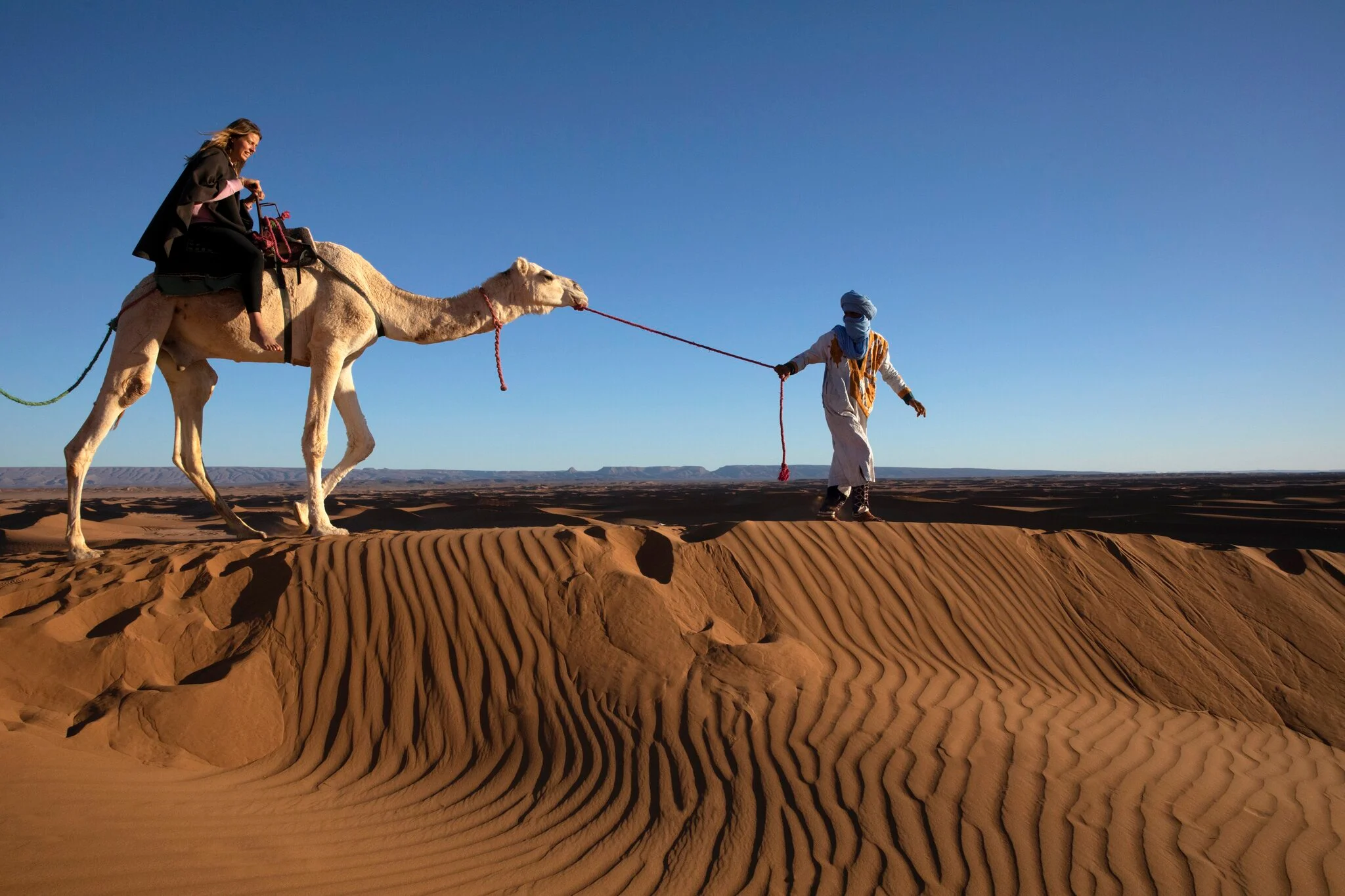
By late afternoon, you reach Merzouga and the dunes of Erg Chebbi. Most tours switch to a camel trek or a 4×4 transfer to reach the camp. Sunset is a major highlight because the dunes change color quickly. After dinner, many camps offer music and stargazing, which adds a memorable finish to the day.
Camel trek vs 4×4 transfer (how to choose)
Camel trekking is iconic, yet it is not mandatory. A short camel ride at sunset can be a great experience, especially if you want classic photos. Still, some travelers prefer a 4×4 transfer for comfort or personal reasons. Many operators can combine both, such as a camel ride for the sunset portion and a 4×4 transfer back if needed.
If you are unsure, decide based on comfort and timing. Camels can feel unstable for some people, and the ride is slower. A 4×4 transfer is quicker and easier, especially with heavier luggage or tight timing. Either way, you can still enjoy the dunes, the silence, and the night sky.
What to expect in the desert camp (comfort, bathrooms, and night temperatures)
Desert camps vary widely, so you should confirm what “standard” and “luxury” mean before you book. Standard camps may have shared bathrooms and simpler bedding. Luxury camps usually offer private bathrooms, thicker mattresses, and a quieter layout. That comfort difference matters most in winter and in hot summer periods, when good sleep becomes a priority.
Desert temperatures drop at night, even when days are warm. Therefore, warm layers are important, especially from October to March. The camp evening usually includes dinner, tea, and music around a fire. If you prefer a quieter atmosphere, ask whether the camp has a calm area or set quiet hours.
Day 3: Merzouga → Ziz Valley → Midelt → Ifrane → Fes
Day 3 is a long transition from the Sahara to northern Morocco. Many tours begin early to catch morning light on the dunes. The route then crosses the Ziz Valley, known for palm groves and wide valley views. After that, the landscape shifts again as you climb toward Midelt and cooler, higher regions.
Later in the day, many itineraries pass cedar forest areas and the town of Ifrane. Ifrane’s architecture feels surprisingly European, which can be a fun contrast after desert scenery. Finally, you arrive in Fes in the late afternoon or evening. This day is long, yet it completes the “crossing Morocco” feeling that makes the route so popular.
Making long driving days easier (real pacing tactics)
The most effective comfort tactic is segmentation. Treat the day as a series of short blocks, with a break every 1.5 to 2 hours. These pauses do not need to be long. A 10–15 minute tea or stretch stop can reset energy and reduce road fatigue. As a result, you arrive with more patience and more enjoyment.
Food choices also matter. Heavy lunches can make the second half of the drive feel slower. Therefore, many travelers do better with lighter meals and snacks. If you travel with children or older travelers, plan more frequent breaks and keep water easy to reach. A calm rhythm always beats a rushed schedule on Morocco’s long-distance routes.
Marrakech to Fes tour costs (what changes the price)
Prices depend on three main factors: tour type, accommodation level, and group size. Private tours cost more per person, but the value improves when 2–6 people share the vehicle. Small group tours lower the cost, but they also reduce flexibility. Desert camp type also impacts price strongly, especially when private bathrooms are included.
When comparing offers, look beyond the headline number. Check what meals are included, what camp you will stay in, and whether local guides are included in places like Ait Ben Haddou. Also confirm whether the itinerary is truly point-to-point or if it includes detours designed mainly for shopping. The best value usually comes from clear inclusions and good pacing, not the cheapest quote.
What is usually included (and what is often not)
Most Marrakech to Fes tours include hotel pickup, transport, a driver, and the nights of accommodation. Dinner and breakfast are often included at the valley hotel and at the desert camp, while lunches are often excluded. This is common because lunch stops vary and travelers have different budgets and preferences. Drinks are also often extra, including bottled water and soft drinks.
Local guides may be optional. Some itineraries include a guided visit at Ait Ben Haddou, while others offer it as an add-on. Tips are almost never included, and they can add up across multiple days. Therefore, confirm inclusions line by line before booking. That clarity prevents misunderstandings and keeps the trip relaxed.
What to pack (simple list that improves comfort)
Pack layers because this route crosses altitude zones and climate changes. Bring a light jacket for Atlas mornings and a warm layer for desert nights. Comfortable walking shoes are essential for ksar paths and gorge walks. Sun protection also matters because shade can be limited, especially near Ait Ben Haddou and Merzouga.
Also pack water, snacks, and a small day bag for essentials. A power bank helps for photos and navigation. A scarf can be useful for wind and dust, especially near desert areas. Finally, keep small cash for tea stops, tips, and small purchases, since card payment is not reliable everywhere.
Food, dietary needs, and drinking water
Tour dinners are usually Moroccan classics, such as tagines, couscous, soup, salad, and bread. The food is often simple yet satisfying. Lunch stops are typically roadside restaurants with standard menus, so variety can feel limited. Therefore, if food is a priority, ask your driver for the best available stop rather than the most common tour stop.
Vegetarian options are usually easy in Morocco. Vegan needs require clearer communication, especially in remote areas. If you have allergies, share them at booking time and repeat them politely at each accommodation check-in. In addition, drink bottled or filtered water unless you are sure about the source.
Safety and common pitfalls (how to avoid a “bad tour”)
The main risks are fatigue and frustration, not serious danger. Long drives can reduce patience, so smart pacing matters. Choose an operator with clear itineraries and a safe driving reputation. If you self-drive, avoid night driving in mountain areas when possible. Visibility changes quickly, and tiredness builds faster than expected.
A common frustration is excessive commercial stops. Some tours include many “free” breaks that are actually sales moments. If you want fewer shop stops, say so clearly. Another issue is unclear guide pricing at tourist sites, so agree prices before a guided walk starts. With clear communication and a calm rhythm, the tour becomes smooth and enjoyable.
How to make the trip feel more authentic
Authenticity is usually created by small choices. Spend more time at viewpoints and natural spaces, and less time in forced shopping stops. Choose a camp that employs local staff and supports the local community. In addition, consider adding a local guide in places like Ait Ben Haddou, where cultural context can transform your visit.
If you want Authentic Morocco Travel Experiences, ask your operator to prioritize culture and landscapes. You can request a quieter camp, a more scenic route, or a stronger focus on local stories. These requests work best with private trips and well-designed small group trips. In contrast, large group tours often cannot adjust easily.
Tailor made Morocco tours and custom Morocco tours (how to personalize Marrakech–Fes)
This route is easy to customize because it has many optional stops. You can emphasize kasbah culture, add more hiking, or prioritize photography timing. You can also choose your accommodation style and camp level. That is why many travelers use this route inside tailor made Morocco tours and higher-quality custom Morocco tours.
Personalization also helps avoid burnout. For example, you can reduce stop count, stay in higher-comfort lodging, and build longer breaks into the day. If you prefer a more social format, you can request a micro-group experience with capped group size. That can combine the value of Morocco Small Group Tours with a more relaxed pace.
How this route fits “Where to Go in Morocco” planning
A Marrakech to Fes tour often becomes the “spine” of a Morocco trip. It connects the south and north while delivering desert scenery in the middle. That makes it useful when you plan Where to Go in Morocco next. After arriving in Fes, many travelers continue to Chefchaouen, Tangier, Rabat, and Casablanca.
It also works the other way around. Some travelers start in Casablanca, visit Marrakech, then do this tour to reach Fes. Others begin in Tangier and want a cross-country experience. When you see how the route connects, your itinerary becomes easier to build. Instead of separate trips, it becomes one coherent journey.
Starting from other cities (Casablanca, Tangier, and Fes)
Many travelers search for Sahara Tours from Casablanca or Casablanca desert tours. These tours are usually multi-day and often connect through Fes or Marrakech. Casablanca is a coastal hub, not a direct Sahara gateway, so extra days are needed for comfort. If Casablanca is your entry city, you can still do a Marrakech to Fes desert crossing later as part of a loop.
From the north, Desert Tours from Tangier are usually longer. They often include Chefchaouen and Fes before heading to Merzouga. Meanwhile, Morocco desert tours from Fes and Fes desert tours are popular because Fes is closer to Merzouga than Marrakech is. Therefore, if you are already in Fes, a desert trip can be shorter and still reach the dunes.
Family planning (Morocco Family Tours) for Marrakech–Fes routes
Families often do best with private or truly small-group formats. The reason is simple: you can stop when needed, adjust walking time, and avoid rushed schedules. This route includes long drives, so breaks and snacks matter. In addition, choosing accommodation with good heating or good AC can make the difference between “fine” and “great.”
For Morocco Family Tours, consider whether camel trekking is comfortable for everyone. If not, plan a 4×4 transfer and keep the dune experience focused on sunset and short walks. Also consider adding one extra day if your family prefers slower pacing. A 4-day version can feel dramatically easier, with more rest time and less daily driving pressure.