Address
doha Imm E4 Res guilize 3éme TR, Marrakech-Medina - Maroc

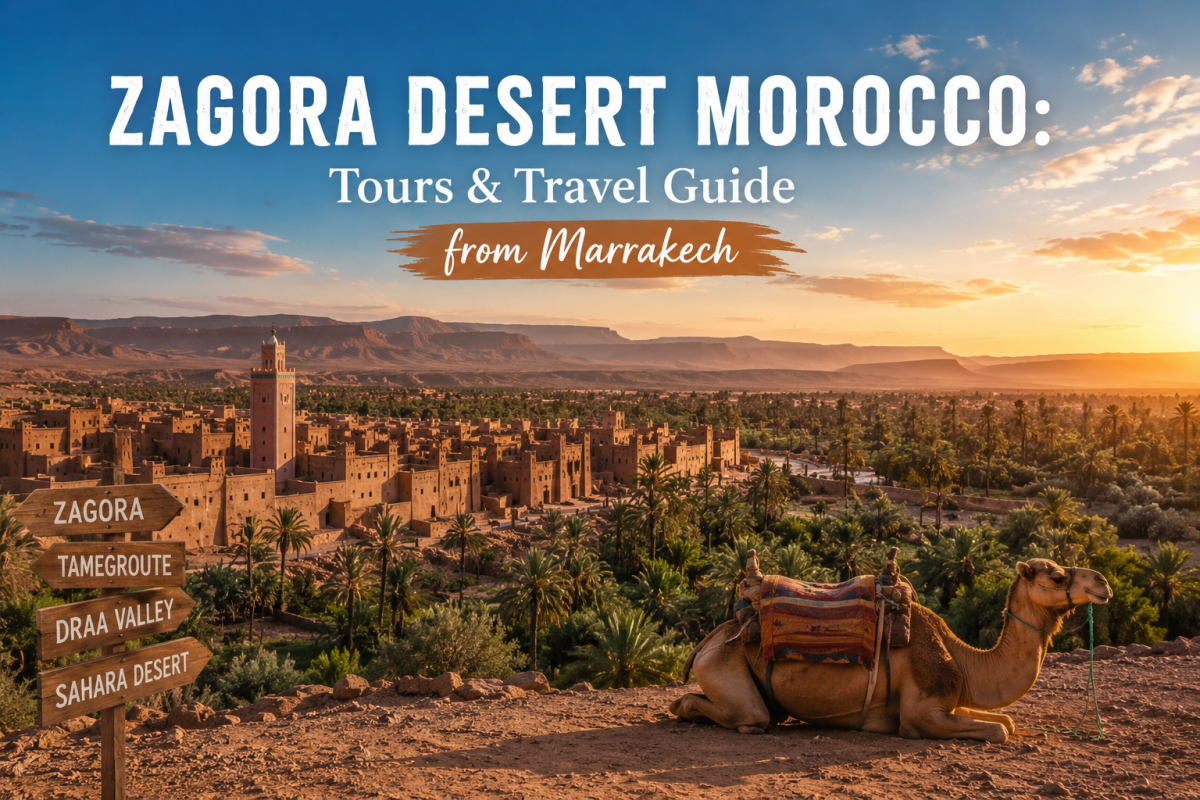
Zagora Desert Morocco: Tours & Travel Guide from Marrakech-26
Zagora Desert Morocco: Travel Guide, Camel Treks & Tours from Marrakech
Zagora Desert Morocco is one of the most accessible ways to experience southern Morocco’s desert landscapes when you are starting in Marrakech and have limited time. Set in the Draa Valley on the approach to the Sahara, Zagora combines rocky desert scenery, palm-filled oases, historic caravan routes, camel trekking and overnight camps.
The journey is an important part of the experience. Traveling south from Marrakesh, you cross the High Atlas Mountains, pass historic kasbahs and Ouarzazate, then follow the Draa Valley toward Zagora. Travelers comparing itineraries can also browse Morocco desert tours and multi-day tours before deciding how much time to spend in the region.
This guide explains where Zagora is, how to reach it from Marrakech, what its desert experience is really like, when to visit, what to pack and how Zagora compares with Merzouga.

Why Visit Zagora Desert Morocco?
Zagora is particularly appealing to travelers who want to add a desert overnight to a relatively short Morocco itinerary. It is approximately 360 km from Marrakech by road, so a two-day trip is possible, although it involves substantial driving across the mountains and southern Morocco.
The scenery changes dramatically along the route. High Atlas mountain landscapes give way to fortified villages, arid plateaus, palm groves and the oases of the Draa Valley. Around Zagora, the terrain is a mixture of rocky desert, low sandy areas and oasis landscapes rather than the enormous dune fields associated with Erg Chebbi near Merzouga.
Zagora also has an important connection to Morocco’s trans-Saharan caravan history. Its famous “Tombouctou 52 jours” sign recalls the era when caravans traveled south toward Timbuktu. For additional destination information about the wider Ouarzazate-Zagora-Tinghir region, Morocco’s tourism portal provides an overview of the area’s natural landscapes around Zagora.
Where Is Zagora?
Zagora lies in southeastern Morocco in the Draa Valley, south of Ouarzazate and roughly 360 km from Marrakech. The town serves as a practical base for exploring nearby oases, villages and desert areas extending toward the Sahara.
One of the region’s defining features is the Draa Valley, where long palm groves contrast with dry mountain and desert terrain. Traditional villages and earthen kasbahs add a cultural dimension to a journey that is as much about southern Morocco as it is about reaching a desert camp.
How to Get from Marrakech to Zagora
The Marrakech-to-Zagora drive is a long but exceptionally varied road journey. Most desert tours leave Marrakech early and cross the High Atlas Mountains via the Tizi n’Tichka Pass. Mountain roads mean that the journey can take considerably longer than the distance alone suggests; a typical travel day can be around six to seven hours or longer when sightseeing and meal stops are included.
The route continues toward Ouarzazate, often called the Gateway to the Desert. Aït Ben Haddou is a popular stop in this part of the journey, and travelers who want to explore the area without continuing to Zagora can consider a Day Trip to Ouarzazate – Ait Benhaddou.
From Ouarzazate, the road heads toward Agdz and follows the Draa Valley, passing palm groves, villages and traditional architecture before reaching Zagora. The route itself is therefore one of the main attractions rather than simply a transfer between two places. Morocco’s official tourism website also provides broader information for planning trips in Morocco.
Popular Zagora Tour Options
A guided trip is convenient for visitors who do not want to organize the mountain drive, desert camp and camel experience separately. The Zagora 2 Days Desert Tour is designed for travelers looking for a compact desert itinerary, while the 2 Days private Zagora Desert option offers a more personalized journey.

The Draa Valley: An Oasis Route to Zagora
The Draa Valley is one of southern Morocco’s most distinctive landscapes. Extending for more than 200 km, the valley is known for extensive date-palm groves, agricultural areas, historic kasbahs and settlements built along the Draa River corridor.
For centuries, this region was connected to caravan routes linking Morocco with communities farther south across the Sahara. Today, the contrast between green oasis vegetation and arid mountains makes the drive through the valley one of the highlights of a cultural or desert journey.
Rather than rushing through, look out for traditional earthen architecture, ksour, palm groves and viewpoints along the road. The valley adds historical and geographical context to the desert experience awaiting farther south.
What to Expect on a Zagora Desert Tour
A short Zagora trip typically combines a scenic road journey with a camel ride, sunset in the desert, dinner and an overnight stay at a camp. Exact itineraries and inclusions vary, so check your chosen tour carefully before booking, particularly if private facilities, specific activities or accommodation standards matter to you.
Zagora is especially suitable when time is limited. It provides an introduction to Morocco’s desert environment and southern culture without requiring the longer journey needed to reach the great dune fields around Merzouga.
Camel Trekking in Zagora
Camel trekking remains one of the best-known desert activities. Camels were historically essential to travel and commerce along Saharan caravan routes; today, short guided rides allow visitors to experience desert travel on a much smaller scale.
Rides are commonly scheduled around late afternoon or sunset, when the light is softer and temperatures may be more comfortable than during the middle of the day. Follow your guide’s instructions when mounting and dismounting and wear clothing that protects you from the sun and wind.
Travelers considering a deeper journey into Morocco’s eastern Sahara can compare Zagora with the Merzouga region, which Morocco’s tourism authority covers in its guide to Errachidia, Midelt and Merzouga.
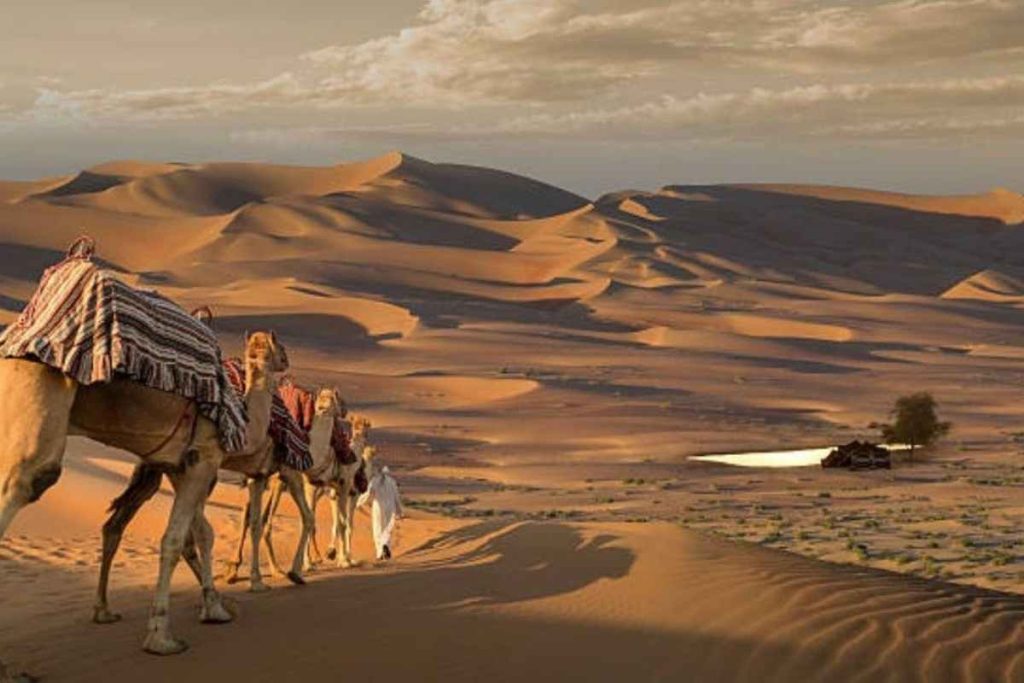
Desert Sunset and Stargazing
Late afternoon is one of the most atmospheric times to be in the desert. As the sun drops, sandy and rocky surfaces take on warmer shades of gold, orange and red. After dark, areas away from settlement lights can offer good stargazing when skies are clear.
Conditions vary with weather, clouds and the moon, so spectacular stars can never be guaranteed. Even so, the transition from sunset to a quiet desert evening is often one of the highlights of an overnight Zagora trip.
Overnight Desert Camp Experience
An overnight camp gives visitors more time to enjoy the desert after day-trippers have left. Depending on the camp and tour, an evening may include a Moroccan dinner, local music and time around a fire before guests retire to their tents.
Camp standards vary considerably. Simpler camps focus on the basic desert experience, while higher-comfort camps may provide proper beds, private tents and improved bathroom facilities. If privacy or an en-suite bathroom is essential, confirm exactly what your booking includes rather than assuming that every “luxury” camp offers the same amenities.

Best Things to Do in Zagora and the Surrounding Desert
Zagora is more than an overnight stopping point. Depending on your itinerary, season and chosen operator, activities in and around the region may include:
- Camel trekking: take a guided ride through the desert, especially around sunset.
- Stargazing: enjoy dark skies away from larger towns when conditions are clear.
- Desert camping: stay overnight and experience the landscape after sunset and early in the morning.
- Draa Valley exploration: discover palm groves, traditional villages and historic earthen architecture.
- Photography: capture mountain passes, oases, kasbahs and changing desert light.
- Cultural visits: learn more about local communities and the region’s caravan heritage.
- Sandboarding or quad biking: these may be available in suitable areas, but availability and inclusion should be confirmed with the operator in advance.
Sandboarding and Quad Biking
Travelers looking for a more active experience sometimes add sandboarding or motorized desert excursions. Zagora’s terrain is not identical to Merzouga’s large Erg Chebbi dunes, however, so the exact setting and availability can vary. Ask the operator where the activity takes place and whether it is included in the tour price.
If off-road activities are your main priority and you are staying in Marrakech, another option is a Buggy Adventure in Agafay Desert. This provides a very different landscape from Zagora but is much closer to the city.
Best Time to Visit Zagora Desert Morocco
Spring and autumn generally provide the most comfortable conditions for desert sightseeing. March to May and September to November are popular periods because daytime conditions are usually better suited to outdoor activities than the hottest part of summer.
Summer in southern Morocco can be extremely hot, particularly during the middle of the day. Winter can bring pleasant daytime conditions, but desert nights may become cold. Whatever the season, check the current forecast shortly before departure and pack layers because temperatures can change substantially between day and night.
What to Pack for a Zagora Desert Trip
Pack for strong sun, dry conditions, temperature changes and time spent getting in and out of vehicles. Useful items include:
- Lightweight, breathable clothing for warm daytime conditions
- A warm jacket or additional layer for cool desert evenings and winter nights
- Sun protection, including sunscreen, sunglasses and a hat
- Comfortable closed or secure walking shoes
- A reusable water bottle
- A scarf or light covering for dust, wind and sun
- Personal medication and basic toiletries
- A camera or phone, plus a power bank if needed
For a one-night desert trip, packing lightly is usually more convenient than taking a large suitcase to camp. Ask your tour provider whether larger luggage can remain in the vehicle or needs to be taken to the accommodation.

Zagora vs Merzouga: Which Desert Should You Choose?
Zagora and Merzouga suit different itineraries. Zagora’s primary advantage is its relative accessibility from Marrakech, making an overnight desert experience possible within a two-day trip. Its landscape combines rocky desert, smaller sandy areas and the Draa Valley.
Merzouga is farther from Marrakech but is the better-known choice for travelers whose priority is seeing the towering dunes of Erg Chebbi. Reaching it requires more road time, which is why a three-day itinerary is more practical than trying to fit it into an extremely short trip.
| Consideration | Zagora | Merzouga |
|---|---|---|
| Best suited to | Shorter desert trips from Marrakech | Travelers prioritizing large Saharan dunes |
| Typical landscape | Rocky desert, oasis scenery and smaller sandy areas | Large Erg Chebbi dune fields |
| Time required | Possible as a two-day trip | Better suited to a longer itinerary |
| Key route highlight | Draa Valley | Longer journey into southeastern Morocco |
If large dunes are essential to your trip, consider a 3-Days private from Marrakech to Merzouga Desert itinerary or the 3 Days To Merzouga desert tour. If time is the deciding factor, Zagora is generally the more practical choice.
Private Zagora Tours and Longer Morocco Itineraries
Private desert tours can suit couples, families, photographers and travelers who value a more flexible itinerary. The principal advantage is the ability to travel with your own party and, depending on the itinerary, adjust the pace of stops along the route.
If Zagora is only one part of a longer trip, desert travel can also be combined with historic cities. A Morocco Imperial Cities itinerary focuses on the country’s major historic urban destinations and can complement the landscapes of the south.
Other cities can add very different experiences. The official Moroccan tourism website has destination information for Fez, while coastal travelers can explore Essaouira. Those planning an extended journey much farther south can also research Dakhla.
Shorter Trips and Activities from Marrakech
Not every Marrakech itinerary has enough time for an overnight trip to Zagora. Travelers with only one free day can compare Day Trips to destinations in the Atlas Mountains, on the Atlantic coast and around southern Morocco.
Nature-focused alternatives include a Day Trip to Ourika Valley, a Day Trip to The Three Valleys or a Day Trip to Ouzoud Waterfalls. For a change of scenery on the Atlantic coast, consider a Day Trip From Marrakech to Essaouira.
Desert-Style Activities Closer to Marrakech
If you want camel riding or off-road activities without spending two days traveling to Zagora, the areas around Marrakech offer convenient alternatives. Agafay is a rocky, arid landscape rather than a Saharan sand-dune desert, but a Camel Ride at sunset in Agafay can work well for a shorter schedule.
The Marrakech Palmeraie is another option for outdoor activities close to the city. Experiences include a Buggy Adventure in Palmeraie, a Camel ride in the Palmeraie and a Quad Ride Palmeraie Marrakech. These should not be confused with a Sahara journey, but they can be useful when your available time is limited.
Practical Tips for Planning Your Zagora Trip
Before booking, pay close attention to the balance between driving and time in the desert. A two-day Zagora itinerary is convenient, but both days include significant road travel. Travelers who dislike long drives may prefer adding another day to their southern Morocco itinerary where possible.
Check what your tour includes, particularly meals, accommodation type, camel rides and any optional activities. If you are staying in Marrakech before or after your desert trip, arranging Airport transfers separately can simplify your arrival or departure logistics.
Travelers should also respect local communities and landscapes. Ask permission before photographing people, minimize waste, conserve water where possible and follow your guide’s advice around animals and desert terrain.

Frequently Asked Questions About Zagora Desert Morocco
Is Zagora worth visiting?
Yes, particularly if you want a short desert trip from Marrakech and are interested in the Draa Valley, camel trekking and an overnight camp. If your main goal is to see Morocco’s largest and most dramatic sand dunes, Merzouga may be a better choice.
How long does it take to travel from Marrakech to Zagora?
The drive is commonly around six to seven hours, but actual travel time varies with road conditions, traffic and sightseeing stops. Because the route crosses the High Atlas Mountains and usually includes stops along the way, plan for a full travel day rather than treating it as a simple point-to-point transfer.
Does Zagora have large Sahara dunes?
Zagora offers genuine desert scenery, but it should not be confused with the large Erg Chebbi dune fields near Merzouga. The Zagora region has more varied rocky, sandy and oasis landscapes. This distinction is important when choosing between the two destinations.
Is two days enough for Zagora?
Two days are enough for a compact trip from Marrakech that includes the scenic journey, a desert experience and an overnight stay. The trade-off is substantial driving. Additional time allows a slower journey and more opportunities to explore southern Morocco.
Is camel trekking in Zagora suitable for everyone?
Camel treks are normally guided, but riding may not be comfortable or suitable for every traveler. Anyone with mobility problems, back issues, injuries or relevant medical concerns should discuss the activity with the operator before booking. Walking or alternative transport may sometimes be available.
What is the best time of year for a Zagora desert tour?
Spring, especially March to May, and autumn, from September to November, generally offer comfortable conditions for outdoor activities. Summers can be intensely hot, while winter nights may be cold.
Should I choose Zagora or Merzouga from Marrakech?
Choose Zagora when you have limited time and want a two-day introduction to southern Morocco’s desert landscapes. Choose Merzouga when seeing extensive Saharan dune fields is a priority and you can dedicate more time to the journey.
Is Zagora the Right Desert Experience for You?
Zagora is a strong choice for travelers who want to combine the High Atlas Mountains, historic southern Morocco, the Draa Valley, camel trekking and a desert camp within a relatively short trip from Marrakech. Its greatest strength is the variety of experiences along the route rather than enormous dunes alone.
Travelers seeking the classic towering-dune landscape should consider extending their itinerary to Merzouga. For those with only two days, however, Zagora provides a practical way to experience Morocco’s desert environment, oasis scenery and caravan heritage without committing to the longer drive required for the eastern Sahara.